What makes a meme coin worth trading rather than a lottery ticket and why narrative beats chart patterns
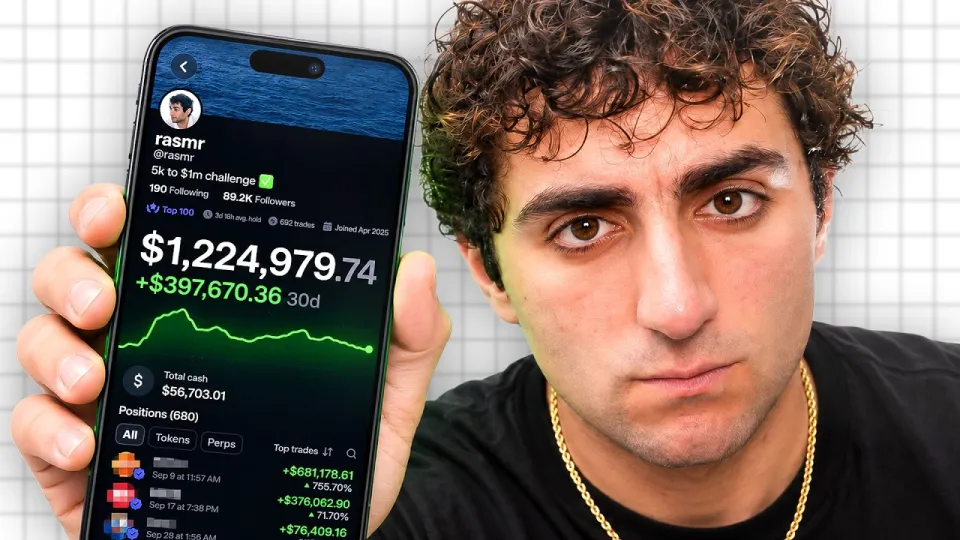
Video: 5 Years of Memecoin Knowledge in 12 Minutes
You can order the same kind of articles for your own video to boost it on YouTube and Google. Just message the Telegram bot @sat_sit_bot. It writes articles around your video, embeds the video and publishes them on popular niche websites (no ads). Try it free: 50 articles on us.
A meme coin is a cryptocurrency whose price depends almost entirely on attention, community and liquidity rather than on revenue, cash flow or a working product — so the better question is not which ticker to buy but which narrative you can enter early and exit cleanly. Treating a meme coin as a trade with a defined risk budget rather than as an investment with a thesis beats any chart pattern. If you want to trade these launches with a low-fee venue, you can register on FOMO through the rasmr referral link and start with small size.
That framing is the core of the breakdown published by the rasmr channel under the title "5 Years of Memecoin Knowledge in 12 Minutes", which compresses years of launch-watching into rules about narratives, market caps and exits. The transcript is not public, but the themes are visible in what viewers asked and argued about underneath it: emotions, greed, round-tripping profits and how to spot a rug.
Why a meme coin has no fundamentals and what replaces them
A meme coin has no earnings, no treasury strategy and usually no roadmap that can be audited, so its price is a function of three things: how many people are talking about it, how much liquidity sits in the pool, and how concentrated the supply is. Everything else — the logo, the mascot, the Telegram emojis — is packaging for those three variables.
What replaces fundamentals is narrative. A narrative is the reason a stranger will buy after you: a cultural moment, a celebrity event, a political headline, an animal, an inside joke that a specific online community already repeats. Narratives have a lifecycle — discovery, acceleration, saturation, decay — and the profit sits in the gap between discovery and acceleration. Buying during saturation means you are the exit liquidity for people who entered at discovery.
This is why "good project" and "good trade" are different categories. A token with a real product can still be a terrible trade if the float is large and the narrative is stale; a token with no product can be an excellent trade if the narrative is fresh and the liquidity is deep enough to exit.
The mechanics that decide whether you can actually sell
Liquidity and holder distribution decide your exit before the chart does. A meme coin with a thin pool can print a spectacular green candle and still leave you unable to sell more than a fraction of your position without collapsing the price — a scenario known as slippage eating the entire gain.
Check these before entering:
- Pool depth. Compare the liquidity in the main pair to your intended position size. If your order is a meaningful percentage of the pool, you are the market, not a participant.
- Holder concentration. A handful of wallets holding a large share of supply can dump on any pump. Look at the top holders and whether they are locked, vested or freshly funded.
- Deployer history. The same address that launched a token which went to zero will often launch again. Wallets that funded the deployer tell you who is connected to whom.
- Launch venue and contract. Renounced ownership, no mint function, locked liquidity and a verified contract reduce the number of ways a token can be switched off. None of these make a token safe, but their absence makes it a coin flip.
- Unlock schedule. Tokens that unlock in tranches give early insiders a steady supply of sell pressure exactly when retail attention peaks.
A separate question viewers keep raising is how to recognise a rug before it happens. There is no single signal, but the combination of concentrated supply, unlocked liquidity and a deployer with a short history is the closest thing to a warning label. If you cannot answer who launched the token and who holds the supply, you are not trading a narrative — you are donating to one.
Position sizing is the only risk control that always works
Position sizing determines survival, and survival determines whether any of the rest matters. A trader who risks a small, fixed percentage of capital per idea can be wrong repeatedly and still be in the game; a trader who puts a large share of a portfolio into one launch can be right nine times and lose everything on the tenth.
A workable structure for most people starting small:
- Define a total speculative budget that you can lose entirely without changing your life, and keep it separate from long-term holdings.
- Cap each individual meme coin position at a small slice of that budget — the exact number is personal, but the cap must exist before you enter, not after the price moves.
- Pre-plan partial exits at specific market capitalisation levels rather than specific prices, because market cap is the number the community watches and reacts to.
- Decide in advance what invalidates the trade — a narrative going quiet, a top holder moving coins, liquidity being pulled — and act on that rule without renegotiating it.
The most common failure pattern is not picking a bad token. It is holding a position that is up substantially, refusing to sell because the chart looks strong, and giving the whole gain back. Round-tripping a large unrealised profit is a sizing and exit-discipline problem, and no amount of chart study fixes it.
Emotions and early access are the two things traders misjudge most
Emotional execution, not information, is where most accounts die. Buying because a chart is going up, averaging into a losing position while hoping for a bounce, and adding size after a win are the same mistake in three costumes: letting the last candle set the position instead of a plan written before entry.
The second misjudgement is early access. Being in a private group that hears about a launch before the public is genuinely an edge — but only if you can verify who runs the group, what they hold, and whether the "early" call is early for you or early for them to sell into you. Groups that advertise insider circles rarely publish their own wallet history. Treat any claim of being inside a connected launch circle as marketing until proven otherwise, and never size a position on the assumption that someone else's information is better than your own risk limit.
A practical counterweight is a written post-mortem after every trade: what the narrative was, where you entered relative to the launch, why you exited, and which decision was emotional. After a few dozen entries, the pattern in your own behaviour is more valuable than any new indicator.
How to research a meme coin in fifteen minutes
A repeatable research routine beats intuition, and fifteen minutes is enough to filter out most bad ideas. Work through the same checklist every time so that you compare tokens against a standard instead of against your mood.
- Identify the narrative in one sentence and ask whether it is still accelerating or already everywhere.
- Check the contract for ownership, mint authority and liquidity lock status.
- Look at the top holders and the deployer's funding history.
- Compare pool liquidity to your intended position size.
- Find the token's market cap and estimate where the next psychological round number sits — that is usually where early holders start taking profit.
- Write the exit plan, including the invalidation condition, before placing any order.
If any step cannot be completed, the answer is to skip the trade. There will be another launch within days; there is no shortage of meme coins, only a shortage of capital for people who keep blowing it up.
Useful links
- FOMO registration via the rasmr referral link — the trading venue promoted with the video.
- Catalyst trading Discord — the community and trading group linked in the description.
- 5 Years of Memecoin Knowledge in 12 Minutes — the original rasmr video this article is built around.
The takeaway for anyone trading meme coins
Meme coin trading rewards process over prediction: a fresh narrative, verifiable on-chain mechanics, a position small enough to survive being wrong, and an exit written down before entry. The rasmr channel's compressed breakdown is useful precisely because it treats these launches as risk management problems rather than as lottery tickets, and the viewer discussion around it confirms the same lesson from the other direction — the losses people describe are almost always emotional, not analytical. Start small, verify the deployer and the holders, and decide your sells in advance. If you want to put the framework to work with a low-fee venue, sign up on FOMO through the rasmr link and keep your first positions deliberately tiny.
Key takeaways
- Meme coin prices are driven by attention and liquidity, not cash flow — there is no earnings or product to value, so narrative timing matters more than chart patterns.
- Most meme coin losses come from emotional entries and round-tripping unrealized gains, not from picking the wrong ticker.
- A token's launch venue, deployer history and holder concentration decide how fast a position can be exited, not just whether it goes up.
- Position sizing and a written exit plan (partial sells at set market caps) do more for returns than any indicator.
- Early access to a launch group is an edge only if you can verify who is behind it and how the token unlocks.
Source: 5 Years of Memecoin Knowledge in 12 Minutes · Markdown version
Questions & answers
How do I avoid round-tripping a big unrealised profit on a meme coin?
Decide your partial exits in advance at market capitalisation levels rather than at prices, and sell a fixed fraction at each level regardless of how strong the chart looks. The gain only exists once it is realised; a position that doubles and returns to entry has cost you the same as a loss in opportunity terms. Writing the plan before entry removes the decision from the moment when greed is loudest.
What are the earliest warning signs that a meme coin might rug?
Concentrated holder supply, unlocked or removable liquidity, a deployer with no history or a history of dead launches, and a contract that still allows minting or ownership changes. None of these proves a rug on its own, but several together mean you cannot verify who controls the exit. If you cannot identify the deployer and the top holders, skip the trade.
Is being in an early-access launch group a real advantage?
It can be, but only if you can verify who runs the group, what they hold and when they sell. Groups that claim insider connections rarely publish their own wallet history, and being told about a launch early is worthless if the information exists so that you buy what insiders are selling. Treat early calls as one input among several and never let them override your position size limits.
How much capital should a beginner put into a single meme coin?
Only a slice of a speculative budget you could lose entirely without affecting your finances, and only a fraction of that slice in any one token. The exact percentage is personal, but the cap must be set before entry. Small size is what lets you be wrong repeatedly while you learn, which is the actual goal in the first months of trading these launches.